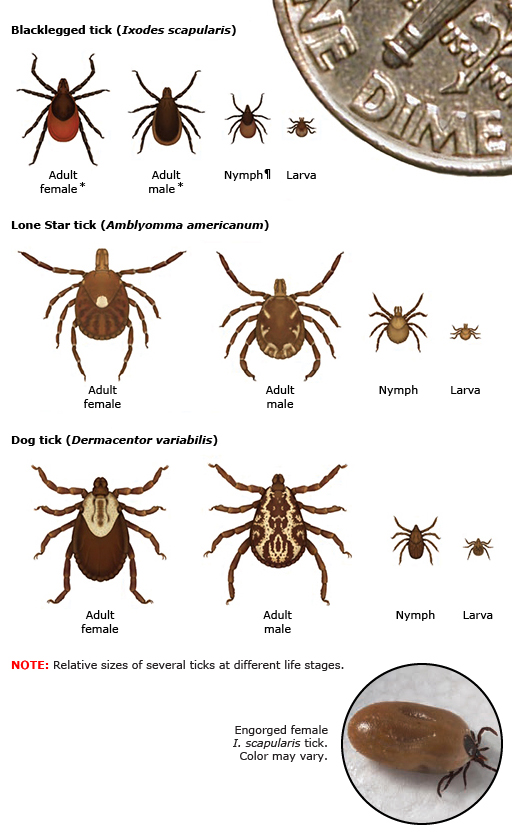
June is busting out all over, the sun is out, the end of the school year is in sight. And, the number of ticks be of ticks being found on children and pets skyrocketing. Because of the moist spring and climate change, the tick population (not to mention deer and mice which are important vectors in the life cyle of deer ticks) is thriving.
We are getting calls daily about ticks being found on patients and questions about treating with preventative antibiotics. The most important steps you can take are to limit your children’s exposure to tiTry to keep them out of tall grass and woods where deer and mice might roam. Long pants and sleeves with elastic can prevent ticks landing on exposed skin. Insect/tick repellent used judiciously can also help. Most importantly checking for ticks on a daily/nightly basis will assure that any tick exposure will be less than 24 hours.
Antibiotic prophylaxis is indicated for nonpregnant adults and children who meet all of the following criteria:
•Attached tick is identified as an adult or nymphal I. scapularis tick (deer tick).
•Tick is estimated to have been attached for ≥36 hours based on degree of engorgement or time of exposure.
•Prophylaxis is begun within 72 hours of tick removal.